Author: admin

  • Flash End-of-Life: What does this mean for you?

    The end of life for Adobe Flash is approaching rapidly. The end-date for Flash is scheduled for the end of 2020. Soon Adobe flash will be a thing of the past and will bring the end of some insecure interactive content on the web.

    The time for Flash is almost up

    The end of life for Adobe Flash is approaching rapidly. The end-date for Flash is scheduled for the end of 2020. Soon Adobe flash will be a thing of the past and will bring the end of some insecure interactive content on the web.

    With this, we no longer have the need to call upon third party software, all work can be done by simply switching to HTML 5 and by the end of 2020, Adobe Flash will not be update-able nor downloadable.

    Adobe said in a statement, “Over time, we’ve seen helper apps evolve to become plugins, and more recently, have seen many of these plugin capabilities get incorporated into open web standards. Today, most browser vendors are integrating capabilities once provided by plugins directly into browsers and deprecating plugins.”

    In the beginning of YouTube, Flash was the standard format of viewing video. Back then, users who wanted to watch clips as a stream in their web browser were forced to install the Flash plugin, as well as having to install regular updates for this software. This changed in 2010 when the developers of YouTube decided to offer videos in HTML5 format instead. Since 2015, all YouTube content can be streamed via HTML5 without a Flash plugin. Today, their Flash content has been replaced by HTML 5.

    Browsers like Chrome, are already blocking Flash Player. Business’s that are still using Flash are running out of time. All business that haven’t already yet migrated to HTML5 need to do so.

    Why flash is obsolete:

    Adobe first released Flash Player in 1996. Considering the age of the software and all the new innovations, it seems pretty fool-hardy to continue with development of the software.

    Cyber security is an area that needs to be carefully considered. Apple chose not to allow flash to be downloaded onto its devices way back in 2010. As a spokes person from apple back in 2009 said “We don’t want to reduce the reliability and security of our iPhones, iPods and iPads by adding Flash”. Companies trying to manage a third party while putting out their own products can be challenging.

    Up till 2010, the Adobe Flash Player was installed on almost all internet-capable computers and was widely used by most software companies. All this did was make Flash a massive target for malware developers.

    The security of Flash has by no means improved over time, rather, Adobe Flash has been left behind while new software standards have improved, like HTML 5.

    What does this mean for your business:

    Flash end of life is scheduled for the end of 2020, which means Adobe Flash will stop updating and distributing the Flash Player software. Any content that is developed in Flash will not work after the end date. To many in the tech industry, Flash has been considered a resource hog and security threat.

    Not only are there issues with using 3rd party software, but it keeps your company out of date with other tech enterprises, which are using HTML 5. People who wish to view your product may be put off by having to download 3rd party software to view your content.

    Google Chrome will be disabling Adobe Flash player by default from mid 2019. While you will still be able to enable Adobe Flash in settings, Adobe Flash content will only be run on a per site, per session basis. It’s a pain going through settings to enable Flash, and you don’t want your clients having to do that to use your product. Changing settings in your browser is a work around and will only work in the short term.

    Companies have been upgrading to HTML5 for a while now, as it is the new standard, along with WebGL and WebAssembly. HTML 5 will give better security to all your web applications.

    What can your business do about this:

    Website operators/developers should convert all Flash-based material to HTML5, as their customers may not be able to continue to receive or be able to play Flash content from your website.

    While your business is transitioning from Flash to HTML 5, there are a couple things to keep in mind. Work out your priorities, which content needs to be updated first. Also if something is due to for an uplift or a complete overhaul, that might be a good place to start. You can use a “pilot” approach, this means converting some of your content to HTML 5 and see how your clients react to it. If your business chooses this approach it will be important to allow extra time due to the fact you are collaborating with your clients.

    This is also a great time to look at all your businesses content and work out what needs to be changed or redesigned. Using a structured approach to convert all your projects/products may seem like a formidable task, but it will help make this process more streamlined.
  • Alpha Build of Google Maps’ Augmented Reality Mode

    Using Google Maps in the big smoke can have its issues. As you step off public transport and walk to your destination, you may realise you have been walking the wrong way. Maybe you became disorientated or it was your phone’s compass playing up. Google wants to solve this problem with its work-in-progress augmented reality mode.

    Using Google Maps in the big smoke can have its issues. As you step off public transport and walk to your destination, you may realise you have been walking the wrong way. Maybe you became disorientated or it was your phone’s compass playing up due to the fact you are surrounded by large metal infrastructure.

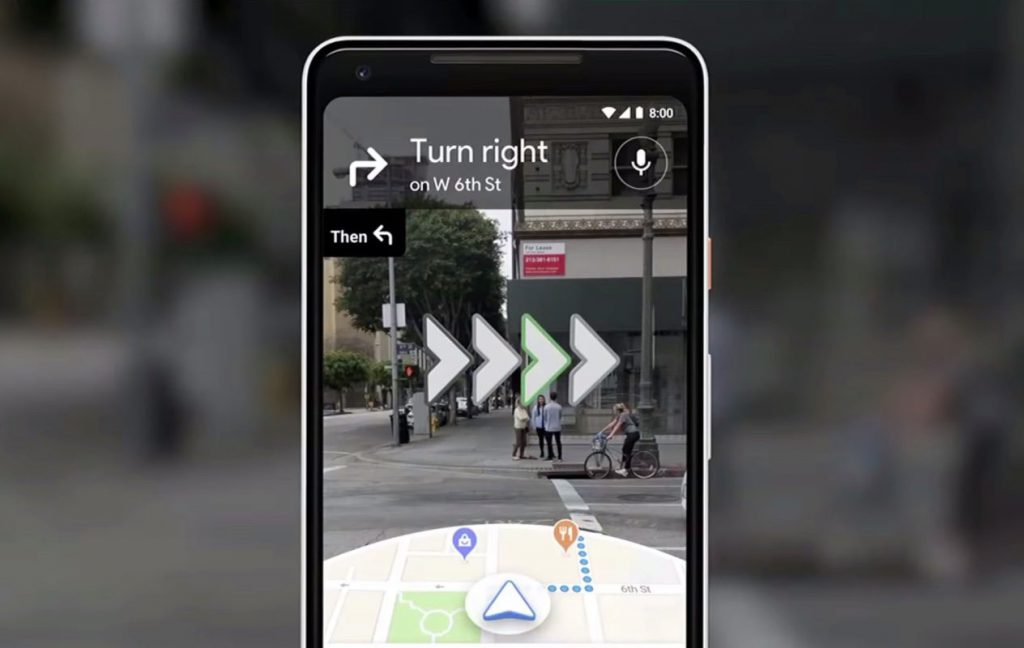
    Google wants to solve this problem with its work-in-progress augmented reality mode. This will use your camera’s view of the real world and will superimpose arrows and signs onto the real world, so you know exactly where to go. It uses the view of your camera and compares it to the Google Street View imagery database to figure out exactly where you are and which way you are facing. This makes up for inconsistencies from your GPS and/or compass. Currently, this app is in alpha testing stages.

    It was almost a year ago that Google first announced its plans for AR walking directions at its annual I/O conference, but it has been quiet on the subject since. A lot of this time has been spent figuring out the finer points of the UI. Safety became an issue as early users tried to stand directly on top of the line when walking, even when it was not safe to do so. Google tried using floating particle effects in the air to represent paths and curves. A user commented on this and described it as if they were ‘following floating trash’.

    Also noted by the Google Maps team was that nobody likes to hold their phone up for a long period of time. The AR experience is designed keeping in mind that users will only need to use this in short bursts.

    Using AR mode feels very much like Google Maps has for any other journey. Start by entering your destination as you normally would, then tap the walking directions button. The only difference is you tap the “Start AR” button instead of the “Start” button. Your camera’s view will now appear on the screen. The app will ask you to point your camera at a building or landmark, you will notice a bunch of dots appear as it recognizes landmarks and points of interest around you. After a few seconds, the dots will fade away, which are then replaced by arrows and markers to guide you on your journey. On the bottom of the screen, you will see a small cut-out showing your location on the map, which means you don’t have to switch modes see your ordinary map.

    Holding your phone more parallel with the ground, Google Maps shifts back to the normal 2D map view. Hold your phone up like your reading a text message and Google Maps switches back to AR mode. Google Maps AR certainly works better in some situations than it does in others. This is to do with the view your camera has to relevant buildings and landmarks from your point of view. The clearer it can see that sort of infrastructure the more accurately the app works. If you are somewhere like in the middle of a plaza, it will probably take a few more seconds to get its bearings.

    After seeing other companies using AR, Google decided their AR experience is something you should only view for a few seconds at a time. Looking at the world through your phone for a long period of time can make you a victim to what’s happening around you, from thieves to walking into a pole. The city is best experienced with your own eyes anyway.

    One part of this app works by using your camera; it takes that image and compresses it, then sends it to google. Once the image gets to the cloud, Google then analyzes that image and picks out the unique visual features. While Google is doing that, it is already analyzing your GPS location. From this information, Google has two points of reference, the image from your camera and your GPS location. This is enough for Google to work out exactly where you are and what you are looking at.

    Currently, Google is rolling out this product to the “Local Guides“, which is a community-based group that gives feedback to Google. Google currently doesn’t have a time frame for this product to hit the mainstream.

  • Microsoft Unveils the Hololens 2

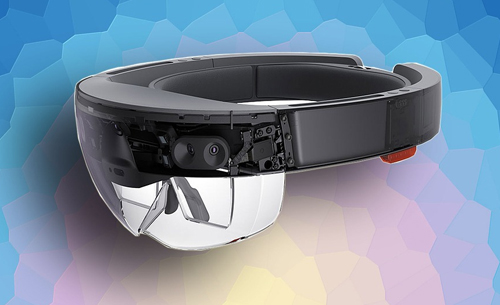
    A few years on from the first Hololens, Microsoft Hololens 2 is available for preorder for $3500. In comparison, its lighter and smaller than the original and has some significant improvements. Due out later this year, it will only be sold to corporations, who wish to make this technology available for their workers and wont be sold to individual customers.

    A few years on from the first Hololens, Microsoft Hololens 2 is available for preorder for $3500. In comparison, its lighter and smaller than the original and has some significant improvements. Due out later this year, it will only be sold to corporations, who wish to make this technology available for their workers and wont be sold to individual customers.

    The Hololens 2 is designed with “first-line workers” in mind – from auto shops to factory floors, operating rooms and out on the field doing on-site repairs. It’s design is keeping in mind that people who work with their hands find it hard to also use a smart phone or a laptop. It’s all about helping in the areas that the smart phone type technology can’t help with.

    A lot has changed with the Hololens 2 compared to its predecessor. It’s a fairly large step forward and packed with new technologies. This version is more comfortable, so wearing it for extended periods will be easier and it has an entirely new display system. Another improvement is its field of view which is much larger, so you don’t have things jumping in and out of view. It features new technologies like an ARM processor, the Azure Kinect sensor and new eye-tracking sensors.

    Other features include realistic sounds coming from two speakers, as well its ability to see what your hands are doing more accurately. The visor also flips up. Also new is its 8-megapixel front-facing camera for video conferencing, with a full 6 degrees of tracking and it also uses USB-C for charging.

    A major area of improvement has been the field of view. The first Hololens could only show holograms in a somewhat small box, directly in front of you. If you were to turn your head just little bit, the holograms would disappear from your field of view. Another limitation of the original was that the holograms would clip out of existence while you were looking right at them. It could be compared to viewing the digital world through a letterbox slot. Microsoft has rectified this issue by doubling the size of the field of view. In doing this, it doesn’t feel like you’re looking through a rectangle anymore. According to Microsoft, its like each eye has the equivalent of a 2k display in front of it. A more precise spec is that it has ‘holographic density of 47 pixels per degree’, which means you can read about an 8-point font size.

    Normally with technology products, manufacturers often seek improvements by increasing battery power or using faster processors and the like. But Microsoft, in order to improve the display, has realised it also needed to be lighter and has used a new kind of display technology for the Hololens 2.

    Laser-based displays are becoming popular among VR/AR based technologies. Intels Vault project, which involves the use of lasers, and North Focals smart glasses, both use this technology. Microsoft is taking this same technology one step further. Hololens 2 lasers shine directly into a set of mirrors that oscillate at 54,000 cycles per second, at this speed reflected light paints the display. These two peices working together, form the basis of microelectromechanical system (MEMS) display. While that part is hard enough, the hardest part for this display is getting the image right into the eye ball.

    The North Focals project has solved this problem by using holographic film on the lens, to reflect the image directly into the retina. This of course has drawbacks, such as a tiny display with low resolution. The most problematic part is simply ensuring the display is aimed correctly at your eye. It means for North Focals, the image will sometimes disappear completely, if it is misaligned.

    Wave guides are an important feature and were used with the original Hololens. Microsoft created a whole new etching system for the wave guides for Hololens 2. Wave guides involve pieces of etched glass that reflect the holograms in front of your eyes, directing light to the right place.

    Hololens 2 wave guides are much lighter as there are two sandwiched glass plates instead of three. By increasing the angle of the mirrors that reflect the laser light, wider angles are achieved, resulting in a bigger, brighter image. Due to the fact that wave guides lose a significant amount of light, the lasers in the Hololens 2 are much brighter. Displays were set at 500 nits for a demonstration but Microsoft could go much brighter for the final version, depending on the power draw.

    While alignment is easier with wave-guides, it is by no means perfect. This is why Microsoft uses two small cameras on the bridge of nose, directed at your eyes. This measures the distance between your pupils to get the image to just the right place for perfect viewing, as most peoples eyes are not evenly placed. Another side point of these cameras is that they can scan your retinas to log you into the Hololens 2 securely. There is also support for the new Windows Hello.

    Putting these three technologies together, lasers, mirrors and wave guides, you get much brighter display with a wider field of view. The wave-guides in the Hololens 2 don’t require fitting or measurements, You can pretty much just put it straight on your head and get going. It requires significant computing power to achieve this.

    Hololens 2 uses the best of new, innovative technologies, as you would expect from Microsoft.

  • Hackathon and Porsche’s dive into Virtual and Augmented Reality

    The Virtual Reality Hackathon took place earlier in the year, looking at the latest in VR, XR and AR technologies. It is the world’s largest Hackathon, involving the examination of different technologies and how these can be used in generating new experiences.

    AR, VR and XR have become common place in many important industries. It is currently being used in the entertainment industry and is starting to be used in the manufacturing, healthcare, retail, military and communications industries, to name a few.

    An example of this, is elevator service technicians, who are able to see technical information while analysing and repairing machines on site. Some large retail chains have virtual fitting rooms and smart mirrors that interact with the customer, enhancing their experience. In the field of medicine, there are scanners that project a map of the internal circulatory systems on the patient’s body.

    There are plenty of great use cases of virtual, augmented and cross reality, which have the potential for gaining traction in future technologies in other industries.

    Porsche is currently working with these new technologies in the areas of training and service, as well as customer experience, and are endeavouring to improve and develop in these areas. Virtual reality and the drone ‘Alice’ is helping Porsche’s after-sales employees worldwide understand complex technical concepts. Alice’s job is to guide the mechanics through a series of repair steps on the high-voltage battery found in the Panamera 4 E-Hybrid. While under the supervision of Alice, each step is executed in a safe manner, as it takes place in virtual reality. This is a huge advantage, as the most complex training can be done safely and more efficiently.

    Virtual reality is also the ideal technology for the car enthusiast, providing a unique and exciting virtual experience. The launching of the new Porsche 911 Carrera S at LA Auto show last year, saw Porsche join forces with Slightly Mad Studios, to give an introduction to a new realistic VR experience, where visitors could test drive their latest model.

    Google and Porsche have been working together and have developed the “Mission E Augmented Reality” app. Potential customers can position the “Mission E” at home in the living room or in their driveway. It includes different view modes to allow them to digitally explore Porsche’s first totally electric sports car, the Taycan. Customers can even take an augmented reality test drive using the app on their smartphone for a more complete virtual experience.

    Porsche have partnered with other companies to bring the very latest in ground-breaking technology. For example, in their partnership with WayRay, Porsche are bringing a holographic augmented head up display into their cars. WayRay produces augmented holographic images that are used as navigation systems. One of these navigation systems is Navion, which projects digital data onto the cars windshield, using a process called SLAM (simultaneous localisation and mapping). SLAM maps the environment constantly as you drive, while simultaneously keeping track of the car’s location.

    The Virtual Reality Hackathon took place earlier in the year, looking at the latest in VR, XR and AR technologies. It is the world’s largest Hackathon, involving the examination of different technologies and how these can be used in generating new experiences. It involves interdisciplinary teams from a diverse range of disciplines, such as designers, engineers, artists, coders, sound designers, students, storytellers and imaginative AR/VR enthusiasts from all over the world, with each participant promoting their ideas to form teams. Around a quarter, that is 400 of the 1600 or so participants with the best ideas are selected to create original cross reality experiences and applications.

    In the category “Best use of True AR SDK”, the WayRay team won for its software development kit, which involves the projecting of augmented reality onto a cars windshield. The team created the Accudrive app to help people drive more accurately and safely by integrating AR and ‘gamifying’ the driving experience. This led to a more interesting and fun driving experience as well as increasing road knowledge and safety.

  • How Augmented Reality Will Make Surgery Safer

    Surgery is a highly sophisticated profession. Taking a lot of practice and learning in a range of procedures to be competent- and that is expensive. AR is making it faster, cheaper and more comfortable for trainees to learn and field surgeons to practice their procedures before the operation. This is great for patient’s safety.

    Most significant medical advances and innovations of the past years have been diagnostic imaging: computerized tomography-CT, magnetic resonance, ultrasonography not forgetting mammography. Currently, most surgery involves some scanning before incision. For emergencies, medical surgeons have the CT or ultrasound to guide the procedure. Imaging is carried out in real time in point-of-care during small and big practices.

    Visual data is shown on 3D flat screen, the displays where the health surgeons look away from the patient with their hands while taking the operations. Also, the images aren’t displayed from the viewing angle, but from the imaging device. The medical doctor must use imagination skills to psychologically project the photos and understand while they’re doing the procedures. Different forms of visual are shown partly, and the surgeons have additional undeviating attention to multiple mentally fusing image forms like the CT and angiography into a logical structure of the client.

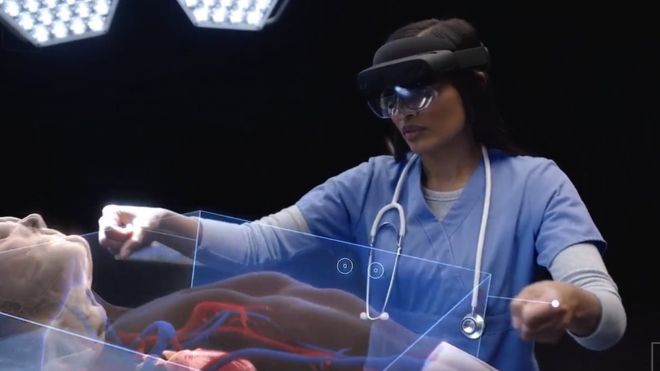
    Augmented reality technology that superimposes digital information from the real world changes all this. In the envisioned application the doctor using augmented reality headset like Microsoft’s HoloLens will be able to observe data directly and digital images overlaid on her field of view. The medical doctor need not look opposite from the patient to several various displays to interpret and gather this information.

    Augmented realty’s ability to concurrently and parallel display patient’s information and another imaging part could decrease medical errors and save lives. This is a procedure done outside the operation room. The operation room is the safest place in the hospital where a single patient is attended to by a team of 5 to 9 dedicated nurses and doctors. Every patient has pre-operative imaging, and the process is diligently mapped. Anesthesiologists administer pain controlling drugs; monitor the patient’s physiology and life-saving medication. It is during these procedures that the patients are at risk and where AR provides excellent benefits.

    In tracking multiple data displays and images, it is easy to miss critical cues for the patient’s status. Single AR display integrates patient’s data and all imaging, allowing the surgeon to keep their eyes on the patient hence improving quality, reducing cost and increasing safety by reducing procedure-related complications.

    The Video Optical See-Through Augmented System (VOSTAR) amounted display system that superimposes the patient’s imaging diagnostic in a 3D unison with their anatomy. It also presents a patient’s medical information such as body temperature, heart rate, breathing rate, and blood rates, quickly into the surgeon’s field of vision in an attempt to increase accuracy by concentrating on the operation and reducing time.

    Although AR for surgical procedures has been the talk in industrial and academic research since the 1990s a tool interlinking surgeon’s subjective perception with patients information hasn’t been widely implemented.

    Latest advances of photonics components such as the high-luminous micro display and LED optical waveguide has been critical in turning what was science fiction into reality. The chief goal of AR in medicine is not just to reduce surgery time but also cost involved and time spent under anesthetic during operation. You are saving 20 minutes every three hours of surgery and a guarantee of actual intervention.

    Making surgeries less painful and invasive: at times surgeons peer inside the human body to have a look at the state of critical organs. But with the help of augmented reality, medical consultants are using computerized tomography technology coupled with magnetic imaging scanners to create a real like three-dimensional image of the patient’s organs. The images are analyzed by the use of HoloLens to look at the virtual picture of the client’s organs and come up with important decisions.

    Innovations in Theatre

    With AR delivered through technologies such as Google Glass, surgeons receive unprecedented real-time insight on operational procedures. The technology exists to create virtual overlay across the medical practitioner’s real-world view, guiding them through the surgery steps for patient’s safety and enhanced performance.

    Credits to 3D modeling, AR can help localize tumors, giving the surgeon X-ray vision without coming in contact with the harmful radiation. Any field of anatomy can be located, modeled and high lightened with point accuracy. The digital technology allows the surgeon to capture mid-procedure pictures that will be added to patients medical records.

    Training with AR

    Surgery is a highly sophisticated profession. Taking a lot of practice and learning in a range of procedures to be competent- and that is expensive.

    In the past surgical training would take place in medical theatres, with students given running commentary and briefs of procedures as surgeons worked. This is vanishing with time. The demand for the availability of surgeon’s time and operating theatres are too high.

    To handle these companies have created thousands of training simulations for portable devices that allow students to follow the surgical procedures keenly. Thanks to AR advent. The augmented reality has made simulations far more authentic, engaging and interactive, which is excellent for learning the outcome.

    AR is making it faster, cheaper and more comfortable for trainees to learn and field surgeons to practice their procedures before the operation. This is great for patient’s safety.

    The AR of Sterilization

    Sterilization challenges are using when it comes to utilizing AR technologies in theatre. Headsets are a source of contamination and unresponsive to anti-microbial scrub down. Gesture tracking, voice control, and foot pedals are the potential options to square the circle. A simple remote control crowned in a sterile bag would work.

    Augmented reality is assisting surgeons in cardiovascular procedures and replacing the aortic and repairing of the hearts mitral valve.

    In the future, the use of AR in the medical field is only going to grow. We’re confident this fantastic technology is going to make sophisticated surgeries simple, precise and less painful for patients. The application of AR is on board, but it is just the beginning. None can predict the feature, but one sure thing is up for exciting times ahead with AR technology. With the widespread adoption of AR among trainees and surgeons, the future of surgery is more efficient and safer than ever before.

  • What is Augmented Reality and How Can It Help Your Business Today?

    Augmented reality is the technology that enlarges our physical world by adding digital information layers to it. Unlike the Virtual Reality, augmented reality doesn’t create a complete artificial surrounding to substitute real with virtual. AR emerges an indirect vision of the existing location and adds graphics, videos, and sounds.

    Augmented reality is the technology that enlarges our physical world by adding digital information layers to it. Unlike the Virtual Reality, augmented reality doesn’t create a complete artificial surrounding to substitute real with virtual.  AR emerges an indirect vision of the existing location and adds graphics, videos, and sounds.

    AR currently presents a new world of possibilities and situations for contemporary businesses. Majority of organizations and businesses share a common goal of getting new customers and clients to purchase their product and use their services. To specifically achieve these entities must engage meaningfully with potential customers, educate users about their services and products, and create long-term connections for future commerce.

    AR is viewing of real-world physical atmosphere with superimposed processor generated images, hence shifting the real perception of reality.

    Designing New Products

    Envision developing a whole brand new car. There are myriad considerations at play: you want to innovate and achieve style without detracting from functionality. AR can ease this development, allowing visualization of the car’s different specifications before committing to building a model.

    You need not to be a car designer to see this immense advantage. A new product that is costly to demo can be easily tested and visualized via AR before investing in the next step.

    Helping Consumers Land on the Right Product

    The biggest challenge about online shopping is that you don’t know whether that hutch fits well in your kitchen or that shirt will look good on you. These reservations stop consumers from making purchases. AR empowers you to try on glasses, clothes or jewelry by overlaying them onto your image. This can be done with the help of a smartphone camera or online. And you can try out a new couch in your warren to make sure the color and size are right.

    Cosmetic shops are getting outfitted with AR mirrors overlaying different makeup looks and styles onto the customer’s face. The process is a more straightforward and quicker way to try out a new thespian transformation without using tester lipstick.

    You can use sophisticated analytical tools to monitor customer’s preferences and provide customized product offers, therefore increasing the probability of purchases.

    The world leading online retailer Amazon has implemented AR view features in a mobile application.

    Improving Efficiency

    AR can be helpful in identifying improvements in your business operations. Car manufacturers are testing capability using AR systems. They are empowered to improve the durability and safety of their vehicles.

    Using AR to imagine and test new processes, scenarios or workflow gives advantages to firms that feel these procedures are slowing them down. The most efficient solution will be found from as many test scenarios as possible.

    Marketing your Company

    Most mobile games have been successfully engaging consumers with branded AR experiences. Businesses can promote themselves a good example is the Pokemon. Some offer coupons and discounts for visitors, while others are thrilled to get new clients in the door.

    Companies are creating their own interactive experiences or scavenger hunt-style to drive interactions. Advertisers are connecting AR ads that appear to consumers while playing their favorite video games. In 2018 AR advertising is estimated to have reached $12.80.

    The hyper-local nature of the AR makes it possible to reach people in your town or down the streets if you have a brick and mortar location.

    Training your Employees

    A considerable number of employees who receive sub-par training leave their job with the first eight months. Meaning there is a direct link between employment success and training and retention.

    AR can help in an instance that manufacturing operations mistake has caused injury to the employees or has to shut down services. AR overlays critical information onto virtual display speeding up or increasing their progress.

    Deliver Product Information Instantly

    The modern customer is a digital consumer. Majority of shoppers are using mobile gadgets when shopping in traditional brick and mortar shops. Buyers use their smartphones to find product information, read product reviews and compare prices. AR allows enhancing buyers’ journey by giving instant product and service information. Clients can use their phones to receive valuable information and scan products on shelves about them instantly.

    Provide Interactive Entertainment

    Potential customers particular the youths are more interested in products accompanied by entertainment. AR technology opens up opportunities for retailers to boost sales through interactive experiences. It is more comfortable selling everyday place products since people get entertainment along with their products. AR can turn conventional paper books into interactive and immersive augmented reality books that interesting to interact with and read. AR can help instill the reading culture in children hence improving their academic performance.

    Enhance In-store Product Positioning

    Retailers know how important product placement is. Retail businesses take product placement sternly because placing a right product on the right shelves boosts purchase. Retailers have created detailed planograms for in-store space plan. However, products are frequently misplaced resulting in substantial financial losses for retailers.

    AR provides an easy way to ascertain that products are well positioned on shelves according to the program. Employees can instantly check for misplaced products using portable devices to scan.

    Increasing Sales

    To gain ground and grow businesses need to increase sales. To overcome this challenge they use techniques like the augmented reality as launching market campaigns and offering competitive prices. AR is a secret weapon helping companies to drive sales and outperform competitors. One in four consumers will purchase a product after previewing it in AR. Hence augmented reality is not just a hot buzzword but an incredibly essential tool for online firms and their brick and mortar correspondents.

    Augmented reality has potential in the retail industry. It is time to implement the AR. The cases above have illustrated that the world’s largest offline and online businesses have jumped on the AR bandwagon and others are following. To grow and stay afloat modern businesses are launching stellar marking campaigns using the AR technology, use in-depth data analysis to reach their audiences and provide almost instant customer support. These methods are critical and to succeed the innovations is to draw attention to the augmented reality that has taken the business world by a storm in the past years. And using AR gives you an advantage over your competitors that you should not miss out.

  • The Impact Of Virtual And Augmented And Reality On Personalized Learning

    Personalized education isn’t a new concept. Before technological insurrection the British education system gave teachers a high level of autonomy regarding matters of how and what to teach. Today we have a different setting. Virtual and augmented reality, in particular, provides us with a chance to improve the level of personalization to the extent we have never experienced before.

    Personalized education isn’t a new concept. Before technological insurrection the British education system gave teachers a high level of autonomy regarding matters of how and what to teach. The system was based on the notion that educational techniques be similarly flexible and similarly tailored to the particularities of the student. The tutor measured student’s achievements against national standards and shoved them to progress in line with their age and abilities.

    Today we have a different setting. Virtual and augmented reality, in particular, provides us with a chance to improve the level of personalization to the extent we have never experienced before. The earlier system was a bit flexible, but learners still had to study from same textbooks and achieve the same goals. With AR and VR we are finally getting closer to the pledge and promise of individualized-tailored education for particular students.

    Defining the concept

    Personalized learning is tuition approach optimized for the exact needs of an individual student. The objectives are crafted in specific accordance with the apprentice’s aspirations, and the instruction substance and the approaches are developed in line with those objectives.

    AR blends the real surrounding with a digital setting. Materials are part of the environment like posters, papers, textbooks, and another different object elicits instructions in the digital context. The learner only points at the device to the object, and they get access to a new sheet of knowledge.

    VR is a computer processed simulation of the 3D environment. It needs different equipment in the form of a headset. In the education sector, virtual reality is a costly affair. But the aftermath advantages are immense since it stimulates real-world atmosphere. A good percentage of learners are thrilled to incorporate virtual reality technologies to improve their learning outcome.

    How VR and AR Impact Personalized Learning

    Walmart isn’t a learning institution, but we can use this organization as a success story of a personalized learning process. The organization is training its employees to enhance their skills through both the VR and AR technology which has positively worked for multimillion dollar companies like Google, BMW, VISA and ABC. The teaching stimulators place the workers in a realistic setting, which gauge their ability to handle various situations in the workplace.

    Can you figure out how this technology will work in education? Assuming learners are being trained of safety and precaution, the VR can place the students in a realistic setting that will assess their skills. The educator can offer some precise instructions and guidelines for improvement. For a perfect situation, every learner would have a virtual reality headset, but it is a bit expensive and only possible with companies like Walmart.

    However, AR is a much affordable option that will still make personalization possible.    AR allows learners to interact and visualize different concepts in the real digital world. As long as learners have smartphones or tablets the trainer can create an interactive experience in AR without writing complex codes. Augmented reality makes the personalized learning process more accurate and relevant.  The whole experience makes knowledge accessible through experiential training opportunities.

    By combining “blocks” and “scenes,” both the student and teacher can expand a range of AR experiences featuring a variety of fun personalities while undertaking computational thinking without taking the learner through a sophisticated programming language. And all this is free. To start of the experience, you only need to come up with an account and install a VR/AR supporting app.

    The efficiency of AR in anatomy learning for medical students is a good illustration of how these technologies help to enhance the education sector. The system behaves like a magic mirror that allows the user to visualize real body anatomy. The system also displays text information, 3D model of body organs, and medical images that the learner interacts with in real time.

    AR and VR Enable Authentic Instructional Practices

    The dual VR and AR are as useful as the instructional processes behind the technology. It requires a lot of time training our educators to be capable of implementing this technology into their classrooms. A hurdle that might be preventing us from fully utilizing it.

    Augmented reality and virtual reality technologies take training beyond the basic observation and memorization. Learners can interact with the material at their pace and access authentic instructional material.

    Engagement Tool

    In learning the virtual reality is the best method for it seems to have extreme power in student engagement. Her solution has taken learners’ inquisitiveness to higher and in-depth level activities that result in natural learning.

    Engaging the students is a prime tool. VR is offerings learner across the board with fantastic chance to learn while having fun. With virtual reality, the possibilities are infinite in the education sphere. Where visualizing means not to absorb information but experience students get deeper with learning.

    In the context of personalized learning, the VR has potential to help adult education stakeholders and learners to explore different setting from their own, solve complex problems, engage in simulations, content modeling or participate in world building and other learning identities and understanding. The possibility of using VR to craft immersive narratives that facilitate education decision makers to go down on the path of the learners and families that their individual decisions affect. This noble act increases empathy and helping academic decision makers take a student’s perspective in policy development.

    VR can be used for students with exceptional academic needs. Thus the virtual reality can upload fresh content on the headset and create an ideal environment for learners to virtually learn and view simultaneously. VR technologists are playing a vital role by providing virtual augmented solutions that help in strengthening the foundation of learners in the VR classroom.

    While there’s still needed to develop to make an average teacher comfortably personalize lessons with VR and AR, it will be a tall order to create an app that will be easy and quick to use for a layperson. This is a platform that takes the much larger scale with tremendous educator’s base developing personalized apps, which will provide machine learning information that will eventually enable self-reliance apps to modify themselves to student’s competence level.

  • Tips To Develop Engaging eLearning For Your Organization

    Developing online courses is one thing, designing courses that are both engaging and effective of another. With the effort that goes into creating the class, why will you not ensure that the eLearning material is useful and well received? An effective eLearning program is one that increases learner’s retention that enhances learner’s interest and delivers essential element.

    Developing online courses is one thing, designing courses that are both engaging and effective of another. With the effort that goes into creating the class, why will you not ensure that the eLearning material is useful and well received? An effective eLearning program is one that increases learner’s retention that enhances learner’s interest and delivers essential element.

    How to Initiate Developing Engaging eLearning for an Organization

    Developing content that will impact essential knowledge is a difficult task to undertake. It even more challenging when it comes to eLearning since you don’t have a teacher or instructor to take care of the knowledge gap.  In the absence of the teacher digital learning content takes the responsibility of engaging learners throughout, making students curious enough to learn and ensuring long-term knowledge recollection.  It is a well-developed eLearning course that can resonate with your apprentice’s to deliver optimum results.

    While there’s no particular secret to creating a successful eLearning course, you start by ensuring the course is relatable and relevant to your organization’s goals and vision. A regular digital learning program should keep up with the ever-evolving need of a modern learner. It must integrate well into your busy employee’s schedule without compromising learning quality.

    Structure Content Carefully

    No learner likes tedious and long courses more so in the digital format. That is the reason you need proactive effort to make it sweet and short.  Embark on it by clearly defining cut learning objectives that don’t leave ambiguity as to what your students are going take away from the lessons.

    Methodically analyze the program’s content input that you can select and have the “need to know” material and some main “good to know” content. This helps your learner not to get confused and stay focused despite the much information.

    Design Pages Optimally

    The relevance of quality design for your course can’t e overstated. A minimalistic, neat design will help learners to focus on the content better. A thumb rule, do not clutter a page with unnecessary information and keep heading topics distinguishable from the body content.

    A clear layout is quick on your learner’s eyes and pulls them in the direction of the course. It maximizes the quantity of knowledge on the page, hence making each one count.

    Integrate Your Brand Image

    Each organization is unique on its own. Make the eLearning course to reflect the same. Ensure that the course takes the shape of the intellectual property of your organization. Be it logo placement, color scheme, the tone of language or style guides, all content should be in sync with the organization’s brand image.

    Incorporating your brand image boosts the seriousness that your employees undertake the training program, as they see you have invested effort in the development.

    Focus on the Readability

    The relevance of fonts in digital content is supreme. The correct font in the proper place makes the difference between the learner ignoring and paying close attention to the content altogether. Use readable fonts when conveying a critical idea a when legibility is a priority.

    Use something eye-catching if you want the learners to pay more attention to information nugget. The same goes to titles and headers within your eLearning program. Boosted readability automatically translates to an improved grasp of knowledge.

    Use a Mix of Multimedia

    Simple text can do much to grab the attention of your learners. For your eLearning to maximally recreate the classroom studying experience, it requires a good mix of a multimedia element like the infographics, images, animation, audio clips, and videos.

    These engage and connect learners better compared to basic text and create an immersive learning environment. The multimedia aspect keeps the course duration short for they can convey more in less time.

    Include Interactivities

    The content you create is likely to involve your employees in the training process passively. Your organization’s work will remain beyond the boundary line, simply spectators.

    Such aspects involve the students in the practicing process by demanding an active response before proceeding. Interactive factors like the game-based content trigger-based actions and drag-and-drop activities should be part of your eCourse.

    Construct a Story

    Use a story based unit will help you develop an instant connection with your employees. Adding a scenario in the course will help learners relate to the real work environment in which you’re going to use the knowledge.

    It is recommended that you fix in a story bases module that features a challenge or situation your learner will likely face in their line of duty with a relatable character. Use a story to teach employees how they can apply the knowledge in their professional or personal lives.

    Integrate Mobile Learning

    Smartphones have touched almost every aspect of our today lives, so education should reflect the same. You should use responsive course design to make sure your eLearning training works faultlessly across devices.

    Have Scope for Exploration

    Interest is what pushes an average person to excellent levels. That is why it’s necessary to keep it alive to your learners. Resource your learner with external links that pave the way for more in-depth research of the subject.

    It is a good idea to provide the learners with a case study about the latest development in their respective fields. The case might not be in their daily work routine, but it is an addition to the workers who are investing in their training.

    Don’t Forget Assessments

    Assessments are tests that help you to gauge how well your employees respond to the eLearning training course and how well they absorbed the content.

    Use the latest authoring tools to move away from the typical question and answer format as you adapt innovative ways to measure learning. Use branching scenario, click and reveal, and drag and drop and other interesting modus operandi for your assessments.

    Connect The eLearning With job Performance

    Ascertain that the eCourse you’re presenting has a connection to the job. Each organization has an ultimate goal they’re collectively pushing to achieve through this entire eLearning course. Ensure the program and training you are giving drives towards that goal. This can be taken through a practical question, interactive sessions, and scenario-based exercises that are tied on the job.

  • Tips for Engaging and Effective Compliance Training

    Augmented reality is the technology that enlarges our physical world by adding digital information layers to it. Unlike the Virtual Reality, augmented reality doesn’t create a complete artificial surrounding to substitute real with virtual. AR emerges an indirect vision of the existing location and adds graphics, videos, and sounds.

    Nobody in the eLearning world can get far without getting into some form of compliance training. It is the bread and butter for eLearning designers, and there seem to be an endless stream of legislation that employer needs to make sure that their employees are up to date.

    Once developed compliance courses have to be updated, amended and adapted giving a useful progressing revenue stream.

    However, too much compliance training gives eLearning a terrible name for it reflects its worst-quiz questioning, next clicking, and mind-numbingly dull page turning. More often the tests are poorly done that the answers are either impossibly elusive or blindingly obvious.

    Employees dislike taking compliance training and so the instructor hate offering it. We should the use eLearning instead with the outcome that now leaner detest eLearning.

    Compliance training is more than checking a box. Employees should understand how it helps them improve their jobs.

    How to Achieve Engaging and Effective Compliance Training

    Compliance is a significant aspect for every organization. With regulations attached to it and, compliance is becoming more sophisticated, effective training is becoming essential to help in risk mitigation ensuring there are minimal violations and penalties.

    Therefore, compliance training should be taken with seriousness and not checking a box and meeting the minimum requirements.

    Often employees and their companies shortsightedly see compliance training as a burden and are likely to fail. When organizations take compliance training as an opportunity to grow and improve, they inherently become more profitable and better companies.

    Compliance is more than policies. It equips you’re the right training and skills to handle regulations and complexities of laws-and do their work more efficiently and safely.

    At a minimum, comprehensive compliance course should entail: effective training and education programs for relevant employees, development, and implementation of regular participating coordinating and developing a multifaceted training and educational program that purely focus on the elements of compliance unit and to ensure that appropriate management and employees are knowledgeable.

    Adherence to your organization’s regulation is critical, and most companies now understand the importance of compliance training.

    Know your Audience

    Understanding your audience is significant as it will prove partially impossible to develop and design effective eLearning compliance course suitable for them if you don’t. Armed with information on their education and job experience you can avoid irrelevant details and stick to pertinent matters.

    Keep it Real

    Tie compliance training with the real world cases and the employees will be in a better position to contextualize how their eLearning relates to their daily work activities. Scenarios and actual-world benefit cases that replicate your audience’s work experience will assist them create a connection with matters in a risk-free environment.

    Mix it Up

    Employ learning diversity-kinesthetic, acoustic and visual studying styles can accommodate diverse learning preference. Incorporate different types of multimedia into your compliance training method, with visuals such as gamification, an audio element, and informative videos to avoid monopoly, addressing all preferences and learning needs and adding variety to the training program.

    Don’t Overwhelm

    At times compliance training feels like drinking through a firehose. Employees are expected to comprehend abundance of information in a relatively short period. Make information retainable and palatable by breaking your content into sized modules and enlisting micro learning as you focus on your learning objectives.

    Go Mobile

    Portable learning gives employees the flexibility to access training at their comfort at any point of need, converging learners where they’re and enabling them to switch between gadgets to progress their learning seamlessly.

    Leverage an LMS

    LMS can act as a central data repository to keep training records, certificates, and competencies making it accessible wherever and whenever needed and availing a summary of individual employee’s real-time history, status, and future compliance training calendar.

    Take Pulses

    Online questionnaires, polls, and surveys provide an opportunity for the learners to voice concerns and share opinions as such information can give invaluable insight into your employees and present the opportunity to identify weaknesses and strength of the current training method.

    Give Nudges

    Some of the compliance units require employees to redo training often after the specified period for them to remain compliant. With LMS you will send reminders and nudges to prompt students to check in and re-certify on time. Nudges facilitate delivery of information when it matters most and initiates learning by helping long-term information retention and reinforcement in months or weeks after completing the eLearning.

    Recognize the Modern Learner

    The modern learner has been equipped with technology to self-seek personal knowledge and know-how. The internet is a means of finding instant data with more employees turning to search engines to learn about their jobs. Being updated with the modern learner is essential in compliance training reason-the risk associated with being posted with rules and regulations in the company. Failure to understand your staff motivation and not to address their problems and experiences results in poor engagement and a general negative attitude towards compliance training.

    Be Social

    Collaborative eLearning lets employees work in unison, enriching learning through interaction with colleagues. With the insurgence of social media, learning can take place in an informal setting, anywhere at any time. Social platforms encourage the exchange of knowledge and ideas while supporting joint work, while users with minimal input effortlessly and organically churn the content.

    Have Fun

    Those who claim compliance training can’t be fun they haven’t experienced the right compliance training. Effective compliance encourages an emotional connection between their practice and employees. Emotion is critical for it drives attention which enhances learning and memory.

    Most industry and business organizations rely on compliance training as a way to adhere to the law, rules, and regulations with an intention to avoid penalties and litigations, mitigate risks and a first way are adopting a comprehensive, thoughtful and effective training program for the success of the compliance of your business and employees.

    Compliance training has a stigma of coming across as messy and tedious. Prolonged classroom sessions, pages of content and endless tests are what most people associate with compliance training but with a change in approach and can technology can offer a solution that are more efficient to employers and engaging to employees. Credits to the digital transformation experienced in the past years, businesses are moving to eLearning to meet the modern needs.