Category: Technology

  • Walmart is Embracing Virtual Reality Technology

    Walmart is joining forces with STRIVR to create a state of the art training platform using the best of Virtual Reality technology.
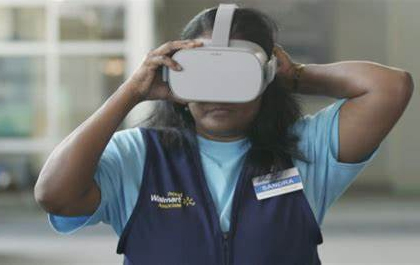
    Walmart is joining forces with STRIVR to create a state of the art training platform using the best of Virtual Reality technology. The announcement was made during Walmart’s annual shareholder meeting. STRIVR is a VR based startup company based in Menlo Park. They have worked with companies such as PepsiCo as well as professional sports leagues such as the NFL.

    During the meeting Walmart stated that it has been employing STRIVR’s technology in 31 of its training academies recently. This has proved very successful and Walmart hopes to roll out the program to all 200 of its academies.

    A few years ago Walmart opened its very first training academy. Each is connected to a Walmart Supercenter and provides all employees in the general area with a classroom setting to learn for two weeks before starting an entry-level job or new role.

    Using the latest Oculus headset, STRIVR’s technology lets the employees experience real-world scenarios. This means employees can prepare virtually for any situation they might deal with in the workplace, such as a highly crowded situations like Boxing day sales, or just cleaning up a spilt drink that a clumsy customer dropped on the floor.

    Another advantage of using this type of training is that the instructor can see exactly what the student can see, which means if there is something the student missed, the instructor can quickly pick up on the issue and let the student know in real time what they have missed and how to address the issue. Other students can also see and weigh in/take tips from the overall performance of their peers. This can be a great learning tool as one can learn from others’ mistakes.

    STRIVR was co founded by assistant football coach Derek Belch alongside professor Jeremy Bailenson back in 2015. Bailenson concluded that VR training was the future as it was proven to be a much more dynamic and in depth way of learning, the trainee is more likely to retain knowledge gained from simulations rather than from a training video. VR training is a more tactile way of learning.

    Virtual Reality technology has improved significantly over the last decade. This has lead to more widespread use in many sectors, especially in job training situations. Major oil companies have embarrassed this technology the most. We are also seeing major leaps in the health sector, helping train physicians in complex operation procedures, which has been seen over the last few years especially.

    Mary Meeker, who is partnered with Kleiner Perkins said in a small article that she expects VR job training to be very important and will be gaining momentum in the coming years. She also spoke of STRIVR’s great success with Stanford football.

    Walmart is expecting more than 100,000 of its new employees will go through its Academy training in due course. They have said this will be “an integral part of that experience.”

    With major players like Walmart joining the VR training revolution, its certain that other major retailers will adopt this style of training, as the benefits from VR training have been proven time and time again.
  • Navy Demonstrates The Spectrum Hunter Using Augmented Reality Technology

    You would think that having state of the art technology on the battlefield would give you a significant advantage? Well think again, as the more tech you use, the more likely your crew will be detected from the RF used to communicate. There is a saying that always rings true in the armed forces. “If your transmitting, you can be found”.

    You would think that having state of the art technology on the battlefield would give you a significant advantage? Well think again, as the more tech you use, the more likely your crew will be detected from the RF used to communicate. There is a saying that always rings true in the armed forces. “If your transmitting, you can be found”.

    While on duty, armed forces are often equipped with many communication devices such as GPS, mobile devices, SOS beacon, hand-held radios, or Wi-Fi, with these devices emitting their own radio frequency traceable back to the sender. This means that a lot of personnel participating in active battles will have to turn off their devices to avoid detection as its important to be invisible to the enemy.

    Currently to ensure transmitting devices are secure, soldiers use a handheld tablet weighing over 4 Kilograms. The device is equipped with a handheld radio to scan for and identify their own frequencies. While this device does come under the banner of portable, it’s still very heavy and can be a pain to use. Not only that, it forces the operator to take his/her eyes off the battlefield in order to scan, which can be risky in a live battle.

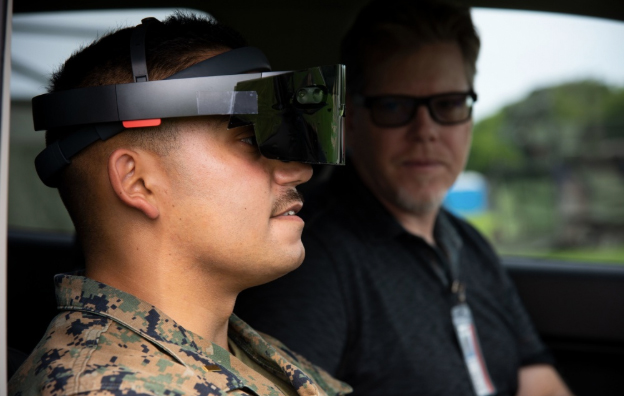
    With the downfalls of the current technology, a Naval Information Warfare Center (NIWC) Atlantic team, is currently developing and testing a new transmission detection system that utilizes Augmented Reality technology. It projects visuals over the user’s real-world environment providing an accurate hands free way of detecting their own RF waves. This new system is dubbed ‘The Spectrum Hunter’

    Operators have a few ways to use and communicate with this device, such as voice recognition technology, and can interpret physical hand gestures. This allows the user to easily locate and deactivate RF transmissions, but at the same time have an active eye on the field looking for danger.

    In an article for Naval Information Warfare Center Atlantic Public Affairs, Sinclair says “The Spectrum Hunter system under development is hands-free. As the user packs a similar-but-smaller geolocator receiver in a backpack and wears a headset inside a helmet that allows them to ‘see’ images of RF waves on an augmented reality screen superimposed over heavy sunglasses,” and also adds “The helmet is fitted with a sunshade so the equipment operates outdoors.”

    NIWC Atlantic Acting Executive Director Peter C. Reddy adds.“The sky is the limit for potential uses for Spectrum Hunter.” and “Augmented reality can enable an operator to more quickly and easily locate the source; this is a paradigm shift toward capabilities of the future.”

    In the future, the Navy hopes to build on and expand the use of its Spectrum Hunter. In time it is hoped that this technology will be used to detect the enemies RF waves as well. “Our team is initially focusing on detecting handheld radios and will expand the scope later to detect cell phones and other devices,” Sinclair explains. “In the future, we plan to modify it to identify RF waves emitting from enemy forces.”

    The prototype of The Spectrum Hunter was showcased last July at Marine Corps Base Camp Lejeune, North Carolina. During this exercise, experts from more than 35 government agencies and industries were able to brainstorm potential insights on how they see this project and where it can go.


  • The AR office space with Magic Leap One

    Augmented Reality has been around for a while now, with there being lots of new uses for this technology, from mockup workplaces to state of the art simulations.


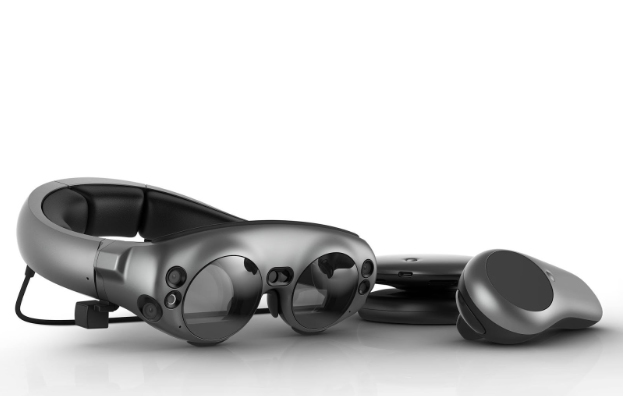
    Augmented Reality has been around for a while now, with there being lots of new uses for this technology, from mockup workplaces to state of the art simulations. It surely is time to utilize this technology in an office environment. Using the Magic Leap One with its CNN app, this combination can allow you to setup an AR space, anywhere, anytime.

    Magic Leap One has been on the market for about a year now. Surprisingly this device hasn’t really hit the mainstream, at least not yet. One thing is for sure, every office could use a bit of livening up with some cool AR products. Magic Leap one is a viable tool for the average white-collar office worker.

    AR Workspaces Are the Future

    The Magic Leap One offers an easy to use truly immersive experience, using wearable AR technology. It’s easy to see how tech like this can enhance your everyday experience of the world around you. Using this technology in the office can improve productivity just by making the most mundane tasks more enjoyable.

    Generally an office space will consist of a whole lot of monitors, mice, keyboards and whiteboards enabling workers to multitask various activities. Now think about donning a headset and having everything you need at your fingertips at all times. Sure, it seems pretty unfamiliar to put something on your head and view the world around you in an altered state. But if you were to really think about it, it makes sense, as you can see exactly what is needed at any time using AR technology. This saves workers time and increases productivity.

    The Magic Leap can be used with other users easily. One of its best features is its ability to put AR holograms in your vision that look pretty realistic. Unlike VR, which closes you off from the world, AR lets you remain engaged with real people and places. Also, although increasing numbers of white-collar workers are working remotely, the working world is still dominated by people in office spaces.

    Magic Leap works best with a high speed internet connection, public wifi such as cafes lack the internet gusto needed. Also noted is that the headset gives off some heat in operation, but as long as your office is air conditioned this will not affect comfort in use. The Magic Leap also comes with a shoulder strap which is very useful when using the device for long periods of time.

    Apps to Use Within Your AR Desktop Setup

    The most important thing to consider when setting up a virtual office with the Magic Leap One, is figuring out which apps make the experience the best it possibly can be. Some apps that work well together are: the Cheddar news video streaming app, Clock app, Wallpaper app via Screens app, Gallery app, Avatar Chat and of course Helio (the AR web browser). When you put all these apps together you get a truly immersive and fun workspace.

    Another useful feature of the Magic Leap One is the ability to force a particular screen to “follow” you wherever you go. The following functionality is in the menu of most Magic Leap apps and can be initialized by clicking on the front-facing bumper.

    With these apps working together, the experience is deep and surprisingly non-distracting. An AR environment that can turn a normal, dull working space into a colorful center of activity.

    If we want to talk about drawbacks, the main one would be its limited battery life, a common problem shared by all mobile devices. In an AR office setup battery life won’t last much longer than 3 hours. This isn’t necessarily a bad thing as it’s a good idea to take a break after a few hours. The Control device consumes much less power if you’re not constantly using it, so it requires much fewer recharges. While on the subject of battery life, it can be inconvenient to have to open the main menu and navigate to the battery icon, just to find out how much power the device has left. Once the Magic Leap drops to 25% power left you will be shown a warning of low battery life.

    Is it worth it?

    The Magic Leap AR office setup may not be everyone’s cup of tea, but for someone with a boring job or limited work space, this might just be the setup. It’s easy to see co-working spaces offering the Magic Leap One as an optional menu item, allowing visitors to create their own virtual space among unaffiliated workers. Because of the relatively opaque effect of the AR panels and the ability to plug a pair of normal headphones into the device, it’s easy to create a bubble of AR constructs amid a crowd of fellow co-working space users.

    People are getting seasoned to the idea of wearing a headset, You won’t necessarily get weird looks by wearing the Magic Leap One in a public setting, though you still might get the occasion look of “what’s that thing on your head?”. People really are now ready for the AR future.

  • Introduction of iTRA’s App, “Tager”

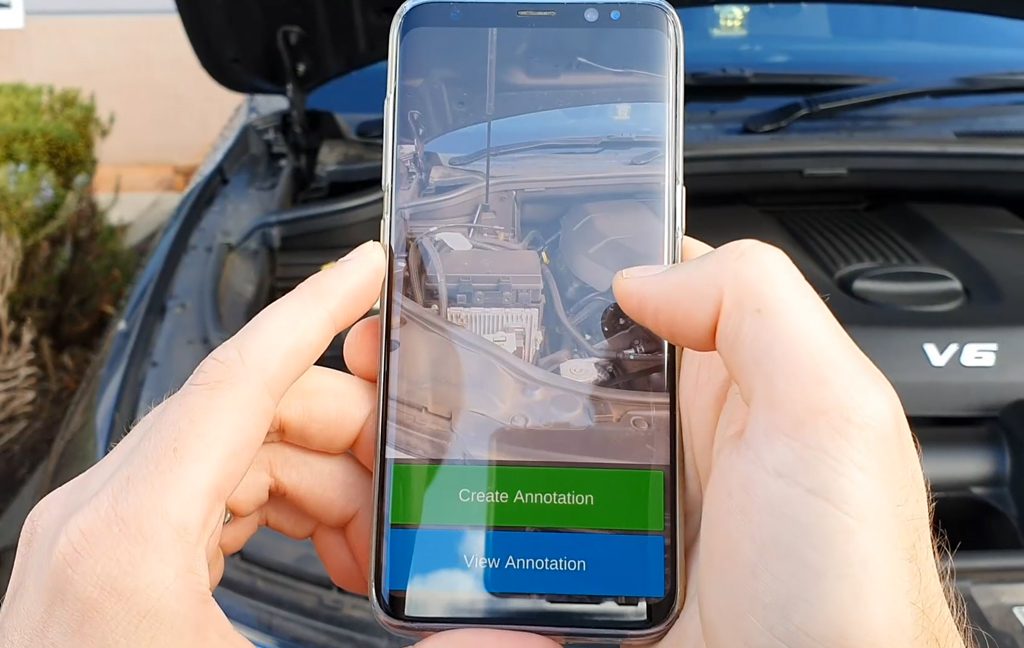
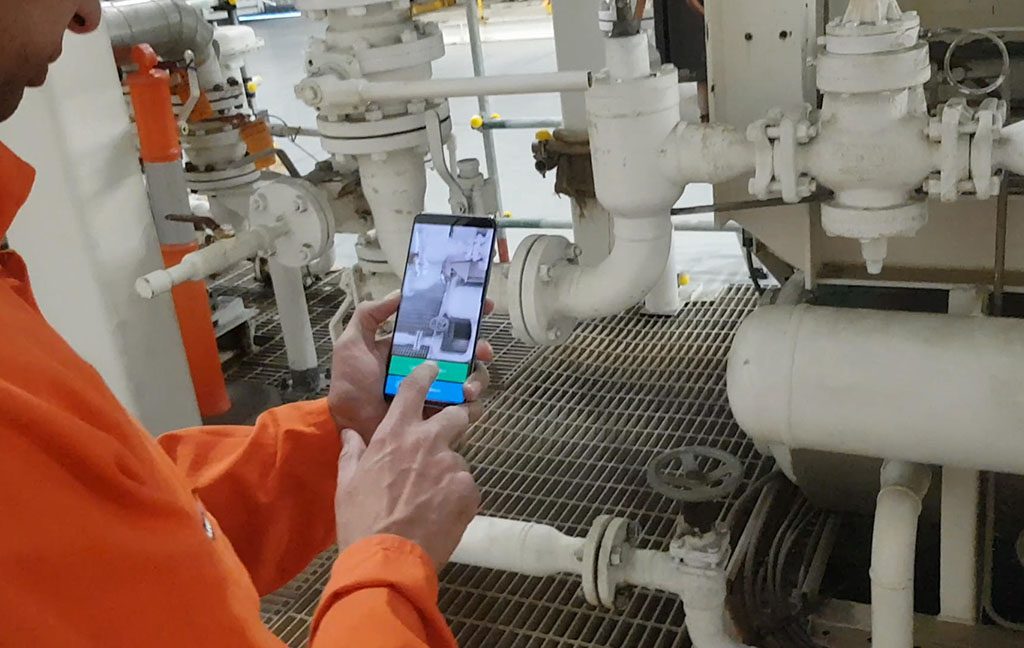
    iTRA are in the development stage of a new App named “Tager” which allows the user to electronically tag items (hence the name). Currently, development is targeting a process to support and enhance the electronic PTW system and also as a potential replacement of QR codes.

    iTRA are in the development stage of a new App named “Tager” which allows the user to electronically tag items (hence the name). Currently, development is targeting a process to support and enhance the electronic PTW system and also as a potential replacement of QR codes.

    The App can be used on any (intrinsically safe) mobile device, with Tag entries directly visible to the process controller / Permit Authority.

    The App essentially works on item and environment recognition. Once the designated item is identified, the user applies the App (tap of a screen) with that “Tag” transferred directly to a database or control system.

    Whilst the existing Permit to Work system remains essentially unchanged, Tager would add an additional layer of control. A Permit Authority, using a device, applies the Tag to the process, plant or equipment, linked to relevant supporting documentation. This Tag can only be applied and removed at the PTW site, not remotely.

    The electronic Tag interfaces with the existing PTW but also locks out the process, plant or equipment.  The process / plant / equipment cannot be re energised until the electronic Tag is removed by the Permit Authority.

    Tager may also be used to enhance or replace the more traditional QR code. Tager would electronically interface with existing processes and not only provide direct visible access to information imbedded in a QR code but overcomes a significant QR Code weakness – longevity of the Code in harsh environments.

    Early days, but the results are promising.

  • How VR Is Revolutionizing The Material Handling Industry

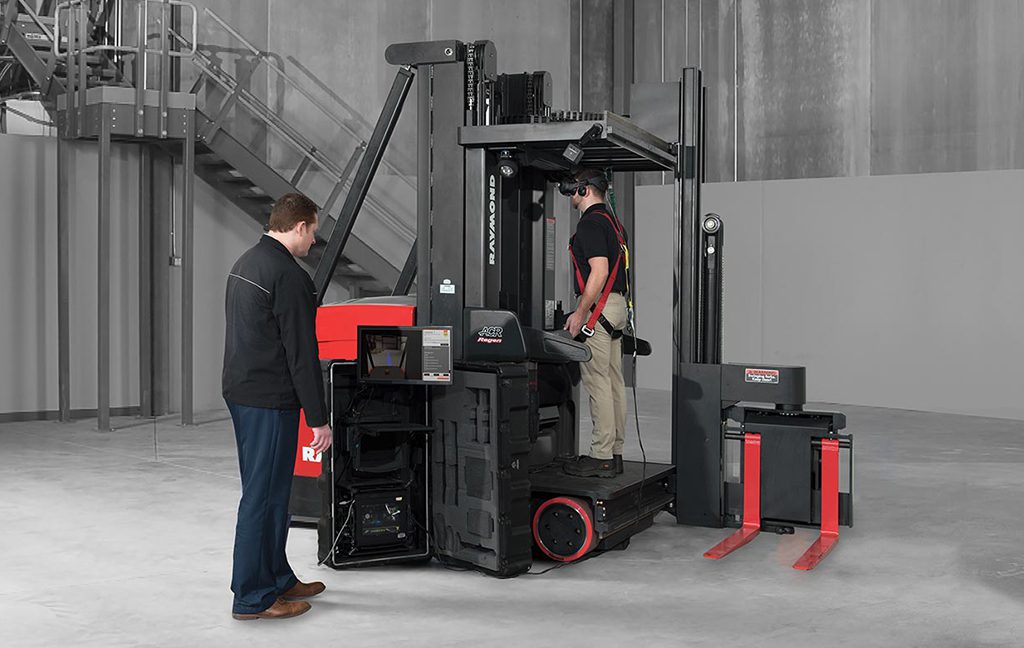
    Operating a forklift with efficiency takes a lot of skill and can take a long time to master. It can take a lot of practice for a trainee to become confident in his/her abilities. Raymond Corporation, who is a subsidiary of Toyota and is a large supplier of forklifts are looking for a better alternative.  

    Operating a forklift with efficiency takes a lot of skill and can take a long time to master. Driving a forklift requires good spatial awareness, especially in a busy commercial/industrial environment. Think about training new drivers in such an environment, filled with risks and fraught with danger, it is not something that can be conducted willy nilly. Someone could get hurt, seriously injured or even killed if the trainee were to make a mistake. Forklifts are heavy equipment and care is needed while under operation. It can take a lot of practice for a trainee to become confident in his/her abilities. Raymond Corporation, who is a subsidiary of Toyota and is a large supplier of forklifts are looking for a better alternative.  

    Stacey Patch is Raymond’s Virtual Reality Simulator Business Manager. Her team have the task of designing a VR simulator. They have looked at various different VR project from around the world, across different industries from flight simulators to medical training simulations. It’s clear to see the potential advantages of this technology for forklift training. Patch goes on to say, “Looking at the way this technology has been used to enhance training in many industries, we realized the same benefits could seamlessly be carried over into the material handling industry”. The team settled on an exclusive partner FreeRangeXR located in Sausalito, California. Also discussed was using the HTC Vive as it ticks all the boxes the simulator needs. The main reason the Vive was chosen was because it offers good enterprise solutions and has extended support.

    Studies have shown that using simulators to train workforce offers better learning retention and greater confidence going into the job. It is also proven that this is a cheaper alternative to standard training. Researchers at Iowa State University have studied VR training in welding simulations with the results showing a massive 41.6% increase in certifications and a 23% decrease in training time overall.

    The Raymond simulator was showed off at SXSW last march. The physics were true and you could feel the interaction. When you turn you can almost feel the momentum of the heavy machine. It gets your heart pumping when the fork virtually ascends into the air to grab a heavy pallet. Virtual Reality Apps of this kind are really turning heads and the market space is ever growing. VR is a powerful tool when it comes to realistic, intensive training. One of the best things about this simulator is that it’s actually quite fun to use, which of course aids in the training process. VR training is becoming more and more commonplace.

    The CEO of Raymond, Micheal Field said “In developing the Raymond Virtual Reality Simulator, we saw an opportunity to help avoid potential product and warehouse damage while increasing overall productivity and efficiency,” he also states “At the same time, we wanted to advance best practices in next-generation manufacturing as well as use technology to pique the interest of younger talent and use the simulator as a key tool for recruitment.”

    The greatest thing about Raymonds simulator, is that similar to a flight simulator using real plane cockpit, it utilizes the actual forklift they will be using. Because of this, every gauge is in its place and controls are in the correct position. Raymonds VR simulator can be added to any of Raymond forklifts, either brand new or existing forklift models. This is the first simulation of its kind as it interfaces with the actual forklift and is using “sPort (simulation Port)” technology. 

    This innovation has earned the Raymond company its place on Fast Company’s 2019 Most Innovative Companies list in the categories of virtual and augmented reality. Raymond also picked up the International Intralogist and Forklift Truck of the Year award and also won an Edison Award, quite a haul and a great result. There is now no question we will be seeing more and more VR products of this kind being used in a variety of training applications.

  • Porting to the Oculus Quest – Part 2

    Just to give you some context to how amazing this is, this model is a to scale 3D model of my house. The reason I am so blown away by the demo is that I am actually walking around my house when I recorded this video. The Oculus Quest tracking did not drift even the slightest bit.

    Not surprisingly, nothing went as smoothly as I was hoping. Once I got into Unity and began the process of converting our current PC VR projects to Android, I was met with a mix of Unity bugs, bad setting configurations and just crashing for reasons that I have yet to figure out.

    I only had a very short window to get something up and running on the Oculus Quest before I had to move on to other projects. I was looking for a quick turnaround so I attempted to convert our most basic package to the new platform. After waiting for what felt like hours for Unity to switch over to the Android platform, I removed all the old cameras from the scene and installed the latest Oculus SDK. I published it to the Quest and to no one’s surprise, it crashed! Instead of spending too long debugging this I decided to start fresh with a new Unity project, import the models and publish again.

    While I was creating the new project, I noticed something new, Unity has a new render pipeline specifically designed for low powered devices. I did a little research into it and got really excited; they were promising up to 100% gains in performance. Knowing how unoptimized the current render pipeline is, I believed them. But of course, nothing is that easy. There seems to be a bug with the package when exporting it to Android. Right at the end of the build process an error would pop up, “Return of the style/VrActivityTheme not found in AndroidManifest.xml” great! I did a bit of research and came across this forum thread. The general consensus seems to be that it will get patched in future releases of Unity. As seems to be the theme of this post, I didn’t have time to look further into the issues and since it is not critical to what I am wanting to achieve, I’ll put the new pipeline on the back burner. I will definitely keep an eye on it though as I’m not one to ignore a free performance increase!

    Back to just trying to get anything to run on the Quest. I created a new project and started with just a cube and the Oculus SDK. I published it to the Quest and I was a little surprised this time, it still crashed instantly. I expected that the default Unity configuration combined with the Oculus SDK would be enough to get it going, I guess I was mistaken. Back to google, and it looks like I’m not the only one having these issues. I found the answer in this thread. It turns out Unity defaults to an incompatible render API. I removed Vulkan from the list and it worked! Now all I needed to do was import my model into the scene and publish to the Quest. You can see the fruits of my labour below. It performed excellently! I’m very impressed.

    Just to give you some context to how amazing this is, this model is a to scale 3D model of my house. The reason I am so blown away by the demo is that I am actually walking around my house when I recorded this video. The Oculus Quest tracking did not drift even the slightest bit. I managed to walk through every room in my house, while wearing the headset, without bumping into any walls! Just as another note, no I didn’t put any time into lighting the scene, I just used what I had set up in Cinema 4D. Ignoring that the scene is a little blown out, I am surprised how great the scene looks and how well it ran with these unoptimized models.

  • iTRA Spatial Mapping Tags

    Place persistent AR markers in the real environment and share them across devices for collaboration. No ugly QR or AR stickers needed. The app recognises your environment and loads previously created tags from cloud.

    Place persistent AR markers in the real environment and share them across devices for collaboration. No ugly QR or AR stickers needed. The app recognises your environment and loads previously created tags from cloud.

    Applications made with this technology connect the physical world with digital assets and will change how we live and work. The possibilities are endless, tags can show real-time data from SCADA or IoT systems too.

    Watch this space, more videos coming.

  • Benefits of Converting Flash to HTML5

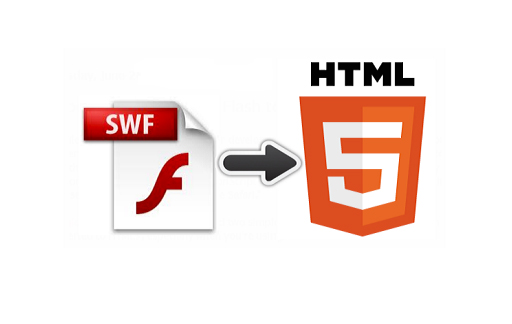
    It is true that Flash will be making a swift exit in 2020. It means, if you have not already started converting content, it is time to do so. Don’t worry this process will not be as difficult as you might be thinking.

    Benefits of converting Flash to HTML5

    It is true that Flash will be making a swift exit in 2020. It means, if you have not already started converting content, it is time to do so. Don’t worry this process will not be as difficult as you might be thinking. It is important to plan the conversion process well to reap the full rewards this conversion can give. Check out our previous Flash article for more information about how to tackle the conversion.

    It is now essential to convert courses to HTML5, so knowing this work needs to be done, why not make the most of it?

    Below are some key benefits this conversion will bring to your business:

    Get to a bigger audience with HTML5

    Organizations will be able to connect with a wider audience with HTML5. These days not many mobile devices are able to use Flash due to the lack of support for it. This means you are preventing a lot of your potential audience from being able to view your courses. Some Flash-based courses will not even run on browsers like Firefox or Internet Explorer, as the Flash plugin needs to be downloaded. HTML5 does not require you to download a plugin, which means it’s compatible with all modern browsers.

    eLearning on any device

    HTML5 is much more efficient as it has significant optimizations over Flash. In the past, Learners have needed to use a desktop or laptop for more graphics intensive courses. Courses that have been converted to HTML5 will not only run faster but will work on mobile devices such as smartphones and tablets. Best of all, HTML5 guarantees the courses will look just the same on any device.

    Learn on the go

    The world is becoming a busier place with technology coming out of the wazoo. It’s important learners have the opportunity to view courses anywhere at any time and HTML5 provides this. It consumes less bandwidth than the Flash-based courses, and also uses less power which makes it perfect for mobile devices.

    HTML5 Offers offline learning

    Sometimes Employees need to be away from their normal work stations. They could be on the move with sales work or working in remote areas such as oil rigs, not to mention areas without good internet coverage. This is where offline learning really has its place. eLearners need the ability to be able to download their courses enabling use at a later date.

    Increasing your ROI

    The conversion from Flash to HTML5 makes good business sense. Its an opportunity to refocus content, revamp existing content or remove irrelevant content. Using outdated courses means a lot of online resources are going unused due to lack of browser support for Flash format. Flash to HTML5 will also affect ROI in a positive way. This is because existing content can now be made mobile-learning compliant and overall content will be enhanced.

    Improving the learning culture

    Because HTML5 is accessible on multiple devices, eLearners now have the ability to learn wherever and whenever they want. No longer does training have to take place on a certain day or time (business hours). Learners can now take their eLearning material home even without a desktop or laptop computer. Just a tablet or smartphone will be sufficient. This aids in developing a great learning culture within an organization.

    eLearning for the future

    The period of conversion from Flash to HTML5 offers the perfect time to update all eLearning content. Whether you are reusing existing content or completely rebuilding a course from scratch, finding the right tool will help make the conversion process a lot easier. With popular choices such as Adobe Captivate, Trivantis Lectora and Articulate Storyline, eLearners will be happy they will no longer have to download plugins for each different device they use with HTML5. By converting from Flash to HTML5 you are not only improving the experience for eLearners, but are also future-proofing the eLearning content.

    In summary, no matter the state of your content, It is possible for it to be converted, or completely rebuilt in HTML5. The quicker you make a strategy and start this conversion, the sooner you will reap the rewards this process will give your business.

  • Porting to the Oculus Quest – Part 1

    The plan is to port all of our existing applications to the Quest, without giving up too much of the quality and complexity in our scenes. Given that we are essentially porting to a mobile processor, this is going to be a big challenge.

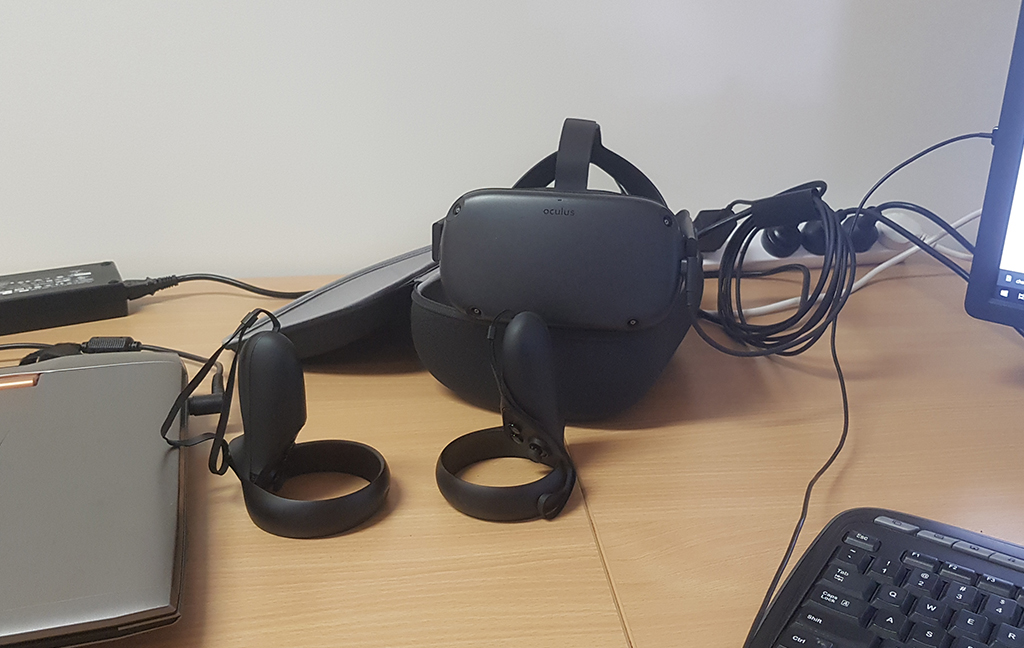
    Since Oculus announced the shipping date of the Quest in April, I have been eagerly awaiting the arrival of our headset. It’s inside-out approach to tracking is intriguing and with the prospect of no more umbilical cord attached to my head, there is a lot to be excited about.

    Everyone who has tried Virtual Reality with us has been really excited by what the technology is capable of, not only now, but what it has the potential to become. A huge draw back thus far has been the cost of the device, coupled with the need for a beefy gaming computer to run the software. This is why the Quest has got everyone, including myself, so excited. Without the need to do the computing externally the barrier to entry is dramatically reduced.

    The plan is to port all of our existing applications to the Quest, without giving up too much of the quality and complexity in our scenes. Given that we are essentially porting to a mobile processor, this is going to be a big challenge.

    I have been working with the Oculus Rift and HTC Vive for the past 3 years using the Unity Engine. It has been great having the performance of a desktop computer powering the headset, but sometimes it is still a struggle to get certain experiences to run smoothly on these devices. I am going to need to double down on optimization, both for the models and code if I want to get these applications running smoothly on the Quest.

    Before I begin this daunting task, I want to play around with a 3rd party application, VRidge Riftcat, which I’ve been following ever since I got my first Google Cardboard. The software essentially renders the game on your desktop computer and streams it over WIFI to another device, be it a phone in Google Cardboard or a Gear VR. This is a great solution for having high performance experiences in cheap, portable headsets.

    After playing around with Riftcat I am quite impressed. They managed to include full Steam VR compatibility, including their room scale guardian system with 6 DOF controllers. This must not have been an easy accomplishment. Unfortunately, this is clearly still a beta. The tracking was flawless (apart from a little latency, but I can forgive them for that) but the quality of the visual stream was a bit lackluster. It suffered from numerous dropped frames and image compression if the WIFI signal degraded even a little. I am going to keep an eye on the project in hopes that they overcome these shortcomings, but for now, I can’t recommend this to clients as a solution.

    It looks like I better open Unity and get porting!

  • Flash is Dead: Upgrading To HTML5 Isn’t As Hard As You Think

    It’s time to have a good think about converting all your legacy Flash courses to HTML 5. Adobe now has your back against a wall regarding conversion. Until now you have been able to use your Flash courses by temporarily unblocking Flash Player, but it’s imperative to update your courses to keep up with a tech fueled, ever-changing world.

    It’s time to have a good think about converting all your legacy Flash courses to HTML 5. Adobe now has your back against a wall regarding conversion. Until now you have been able to use your Flash courses by temporarily unblocking Flash Player, but it’s imperative to update your courses to keep up with a tech fueled, ever-changing world. See our Flash End Of Life post for more details. This may seem quite daunting at first, but it will give your courses a more modern look and feel, not to mention improving efficiency. This will give your business an edge in this crowded landscape.

    It may seem like an impossible task to convert all your content to HTML 5. But with the right plan, not only can you retain all your courses, but also evaluate any gaps that are existing in your e-Learning content, which refreshes the experience that your content deliverers.

    Categorize your courses

    Converting courses does not always mean you have to recreate them from scratch. First of all, you can prioritize all your courses into the following categories:

    1. Courses that meet the learning objectives desired by your business, which only need a technology update.
    2. Courses that mostly meet the learning aspirations your business desires but can do with some small visual enhancement.
    3. Courses that need to be totally reworked with an updated instructional and visual approach.

    While your legacy courses need to be converted, they are not superfluous. They become the foundation on which your new courses will be constructed. Putting your courses into these categories will help you understand just how to attempt the conversion program ahead.

    Ask the Correct Questions

    After you have given the above some thought, you now need to ask yourself a few questions:

    1. Can you do this work internally, or will you need to outsource some of this work?
    2. Do you have a budget in place for this plan?
    3. Do you have a plan to reintroduce the upgraded courses?

    Choosing Partners

    Once you have chosen the correct strategies for your business it is important to keep in mind the needs of your learning content. The conversion of a high volume of content can be tedious and take a lot of time. This is where you need to consider the capability of your team. If extra manpower or technological skill are needed, there are professional e-Learning vendors that have helped accomplish this task many times before. Outsourcing some or all of this work will help your business move forward with this migration in an efficient and timely manner. Choosing a good partner to complement your business through this migration period is key to succeeding in a smooth transition.

    The benefit of outsourcing is that you will work with a committed team of professionals. These are people who specialize in Visual Design, Programmers, Solution Architects, Industrial designers as well as Quality Assurance personnel and End-to-end product management. With these professionals, you can make a customized plan to suit your business needs.

    Create focus groups to delegate workload effectively

    Using the three categories spoken about earlier, it is possible to create focus groups to tackle the different courses that need a particular treatment. It is a good idea to have good communication among these different focus groups, to ensure the overall quality and completion of the project in the time frame required.

    Which technology is right for your business?

    As you will be upgrading and enhancing your courses, it is important not to lose the main objective of your courses, make sure not to lose the initial purpose of the e-Learning courses during the conversion. With the right team and authoring tools working on this project, you can ensure you do not lose sight of your goals.

    Often, the conversion of your legacy courses can be as easy as upgrading which tool you are using to build your courses. Asking professionals in this field can help you quickly identify the new tools you need moving forward.

    Some examples of tools being used today are:

    1. Adobe Captivate
    2. iSpring
    3. Articulate Storyline
    4. Lectora

    Start with a prototype

    Another important part of this process is starting with a prototype. This will help decide the look and feel you desire for your course updates. Having a prototype stage, really does help you find potential problems as early as possible, crucial when dealing with a high volume of courses. The prototype will become the groundwork that all your courses will follow. This aids with the overall flow of work to be done and helps reduce delays in the roll out of your courses.

    Test everything

    When dealing with a high volume conversion project, it is imperative that you test all courses. Check for things like the visual design and functionalities of each converted course to ensure nothing has been overlooked.

    Keep in mind your systems may need to be upgraded as well. Check that your current infrastructure has the ability to support the new courses. If your infrastructure does not support HTML 5, it will need to be upgraded. We reported on Microsoft’s recommendations for which technology to use last week. Once again professionals in this field will be helpful in assisting with this process.

    Over-all, converting all your courses in one single project can be a great achievement. By using the discussed approach, with the right partner and team of professionals, a successful outcome can be achieved. At the same time, this is the opportunity to give all your courses a face lift and bring them in line with the most modern and up-to-date courses out there.